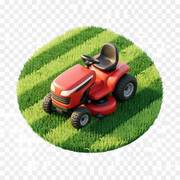
One More Lawn How to Make Straight Lines: The Complete Guide to Cleaner Stripes
Master One More Lawn how to make straight lines with fixed-point aiming, overlap, and terrain fixes for golf-course stripes.
Video by Superdou
If your yard looks like a barcode drawn by a sleepy raccoon, you are not alone. Players hunting for One More Lawn how to make straight lines usually already know the mower works — they just cannot get the first pass to lock in. Learning One More Lawn how to make straight lines matters because score, kerb appeal, and every later stripe ride on that opening path. A crooked first swath multiplies the error on the way back, and no amount of extra fuel saves a pattern that started wrong.
This guide breaks the job into landmarks, overlap, grade, and turnaround habits so the next session looks planned instead of survived.
Why the First Stripe Decides the Whole Lawn
A striping pattern is not a collection of pretty rows. It is one reference line plus a stack of copies. Community reports from longtime lawn players keep circling the same truth: if pass one wanders, pass twelve will wander louder.
Think of the first stripe as a fence you invented. Everything after it is measured against that fence, not against the house, the mailbox, or the feeling in your hands. That is why golf-course crews treat the opener like a survey line and why player experience in One More Lawn how to make straight lines discussions always starts before the blades even drop.
Uneven ground can lie to you. A mathematically straight pass over a hump still photographs as a wobble. If the grade rolls, you are fighting optics as much as steering. Fix the line first, then judge the photo second.
| First-pass quality | What later rows do | Typical result |
|---|---|---|
| Locked to a distant point | Copy a true reference | Even, readable stripes |
| Aimed at a moving object | Drift with every glance | Banana-shaped lawn |
| Guessed by “feel” | Amplify tiny errors | Visible S-curves by row 6 |
| Started off a hard edge | Stay square to the lot | Fastest clean setup |
Keep the first three sentences of any mow boring on purpose. Boring lines are the ones neighbors notice.
Lock a Distant Point and Drive Only Toward It
The most repeated player experience tip is almost suspiciously simple. Pick one still object at the far end of the yard — a fence post, a downspout, a tree trunk, a painted curb mark — and aim the nose of the deck at that object for the entire pass. Do not chase the grass in front of the wheels. Do not “correct” every three feet. Drive the point.
Golf-course veterans in community reports say the same thing with fewer adjectives: choose a point in the distance and go toward it the whole time. The trick is not talent. The trick is refusing to renegotiate the target mid-row.
Use this sequence:
- Stand at the start of the swath and pick the landmark before you roll.
- Square the deck so the center, not the left wheel, points at it.
- Begin rolling before you look down at the turf.
- If you must check the cut edge, do it in a half-second glance, then snap back to the landmark.
- Finish the row even if the last ten feet feel slightly off. Stopping to “fix it” usually writes a kink.
A driveway edge or property fence is the best place to birth that first swath. Hardscape does not wobble. Once row one is cloned from a straight man-made line, later rows inherit the geometry.
| Landmark type | Stability | Best use | Watch-out |
|---|---|---|---|
| Fence post / property pin | Excellent | Opening stripe | Post may not be square to the house |
| Driveway or sidewalk edge | Excellent | First pass and return lanes | Expansion joints can pull your eye |
| Distant tree | Good | Long, open lawns | Trunk looks wider as you near it |
| Roof peak or chimney | Good | Mid-yard corrections | Easy to lose behind branches |
| Neighbor’s mower stripe | Poor | Never | You inherit their drift |
If you came here for One More Lawn how to make straight lines, treat the landmark as a contract. You signed it at the top of the row. Honor it until the deck clears the far edge.
For deeper background on why mowing height, frequency, and pattern affect turf health — not just looks — the University of Minnesota Extension mowing guide is a clean, research-backed reference you can steal technique from without copying anyone’s backyard superstition.
Overlap, Speed, and the Dirty Little Math of Edges
Straight is not enough if you leave a mohawk of uncut grass between rows. Community reports hammer “slight overlap” for a reason. The live edge of the last stripe is your second landmark. Hug it. Do not kiss it from a foot away and hope the deck is wider than you remember.
A practical overlap is about a tire’s width, sometimes less on flat, dry turf and a little more when the lawn is thick, wet, or the deck is dull. Too little overlap writes a dotted line of missed blades. Too much overlap wastes fuel and can shine a double-cut stripe that looks darker than its neighbors.
| Lawn condition | Suggested overlap | Speed feel | Why |
|---|---|---|---|
| Dry, even, recently edged | Half a tire | Steady walking pace | Edge is easy to see |
| Lush spring growth | Full tire | Slightly slower | Grass springs back into the gap |
| Wet or dewy | Full tire plus a hair | Slow and committed | Clumps hide the previous cut |
| Uneven grade | Full tire | Slow, no mid-row surge | Speed changes read as wiggles |
| Tight side yard | Half a tire | Crawl | Over-cutting scalps against fences |
Speed is a stealth villain. Accelerating toward the end of a row because you are bored is how a perfect line develops a fishhook. Keep throttle boring. If you need a drink, community reports are unanimous: celebrate after the last pass, not before the first one. Focus is a stripe tool.
Turnarounds deserve their own respect. Stop past the edge, lift or ease off, pivot in the apron or the street, and re-enter already pointed at the next landmark. A sloppy U-turn at the headland writes a dent that the next three rows try to apologize for.
When players argue about One More Lawn how to make straight lines, they often skip this unglamorous middle: overlap plus constant speed will hide a slightly imperfect landmark, while a perfect landmark with zero overlap still looks amateur.
Grade, Optics, and Why a Straight Line Can Still Look Crooked
You can drive a true line over a rolling lot and still hate the photo. Light and elevation lie. A ridge throws a shadow that makes a ruler-straight pass read as a wave. Community reports from people who actually work course turf keep warning about this: on uneven grade you can have straight lines that refuse to look straight.
Do not “fix” a visual lie by steering into a new lie. Confirm the pass against the landmark and the previous cut edge, not against the skyline. If the lot bowls or crowns, run the pattern so stripes travel with the long axis of the slope when you can. Crossing a crown at a diagonal manufactures a chevron that no amount of pride will flatten.
Lighting is the second liar. Low evening sun rakes across the lawn and exaggerates every tire mark. Midday light flattens contrast so you cannot see the edge you are supposed to follow. If you are chasing showpiece stripes, mow when the sun is high enough to see the cut, then judge the pattern later when the light is low.
| Problem you see | Actual cause | Real fix | Fake fix to avoid |
|---|---|---|---|
| Gentle S-curve | Eyes left the landmark | Re-lock a farther point | Yanking the handles every few feet |
| One fat row, one skinny | Inconsistent overlap | Match a tire-width rule | Speeding up to “catch” the edge |
| Straight but ugly photo | Grade and raking light | Accept the geometry, change mow direction next time | Rewriting the line mid-session |
| Flared ends | Fast turnarounds | Exit past the border, re-square | Tight spins on the turf |
| Missed whiskers | Dull blade or too little overlap | Sharpen, then add overlap | Riding the same row twice at an angle |
A small, honest next step beats a dramatic rescue. If row four drifted, finish the lawn from the new reference rather than trying to weave back toward row one. A single family of slightly rotated stripes still reads as intentional. A correction wave reads as panic.
This is the quiet heart of One More Lawn how to make straight lines: you are managing a visual system, not performing a stunt.
A Repeatable Session Plan You Can Run Cold
Talent is a poor plan. A checklist is a good one. Use the same order every time so your hands stop inventing new habits halfway across the lot.
Before the deck drops
- Walk the perimeter and pick the hard edge that will birth row one.
- Choose the far landmark out loud. Yes, out loud. It keeps you honest.
- Note slope direction and where the light will be when you finish.
- Clear hoses, toys, and that one decorative rock that always jumps in front of a wheel.
During the pattern
- Clone the hard edge for pass one.
- Overlap on purpose, not by accident.
- Keep speed dull and constant.
- Turn beyond the lawn, never on the art.
- If you lose the landmark behind a tree, pre-pick a backup object in the same line.
After the last pass
- Edge after striping, not before, if the bed lines are your frame.
- Blow or sweep clippings off hardscape so the stripes have a clean border.
- Take the judgment photo from the same spot every week. Progress is easier to see than perfection.
| Step | Action | Success check |
|---|---|---|
| 1 | Square to driveway or fence | First cut edge looks like the hardscape |
| 2 | Drive a single distant point | No mid-row steering debate |
| 3 | Overlap a tire width | No mohawk, no double-dark band |
| 4 | Hold speed | Ends of rows match the middles |
| 5 | Turn off the turf | Headlands stay unscarred |
| 6 | Review from one fixed photo point | Pattern reads as a set, not a rescue |
Worked example. A 40-by-60 suburban lot, driveway on the south side, privacy fence on the north. Start flush to the driveway. Landmark: the third fence post from the left. Overlap one tire on the return. Ignore the maple trunk that enters your peripheral vision at row five — that trunk is not the contract. By row eight the yard should look like a notepad, not a river.
That is One More Lawn how to make straight lines as a habit instead of a hope. The radio can stay on. Your eyes cannot.
FAQ
What is the fastest way to learn One More Lawn how to make straight lines? Start every session from a hard edge and drive one motionless object until the far side. Community reports from course workers and weekend players agree more than they argue: the landmark plus a little overlap beats any gadget. Practice the opener twice if you have to. The rest of the lawn is photocopying.
How much should I overlap if the grass is thick? Use a full tire width when growth is lush or damp, and about half a tire on dry, even turf. The live edge of the last stripe is your guide, not memory of how wide the deck is supposed to be. If you see a dashed line of uncut tips, add overlap before you add another full pass.
Why do my lines look wavy even when I steered straight? Grade and raking sunlight fake a curve. Confirm against the landmark and the previous cut, not against the horizon. If the ground heaves, a true line can still photograph crooked. Change mow direction next time rather than drawing a “correction” that becomes a new mistake.
Should I stripe toward the house or across the lot? Stripe so the longest, cleanest run points at the place people actually stand to look — usually the driveway or the front walk. Short, choppy rows across a wide lawn manufacture more turnarounds, and turnarounds are where straight lines go to die. Pick the view first, then pick the landmark that serves that view.
Related Guides
One More Lawn Best Way to Make Money: Complete 2026 Upgrade and Job Guide
Discover the One More Lawn best way to make money with bag sales, zero-turn upgrades, and 100% job routes that stack cash toward a million dollars.
One More Lawn How to Buy Upgrades: A Complete Guide for Grumpy Mowers
Struggling to improve your gear? Learn One More Lawn how to buy upgrades and maximize your mowing efficiency in this ultimate simulation guide.
One More Lawn How to Get New Mower: Zero-Turn Trade-In and Cash Guide
Learn One More Lawn how to get new mower upgrades, sell clippings to Chito, trade for a zero-turn, and avoid delivery mistakes.
One More Lawn How to Turn Radio On: Settings, Custom Playlists, and Fixes
Learn One More Lawn how to turn radio on, mute joke tracks, and import your own music with this 2026 audio settings guide.